AgentOS Scope OutJoin the waitlist
Scope Out crawls PropTech supplier directories, scores every product on four dimensions, and hands your team a ready-to-act dossier — mission statement, feature list, and competitor weakness analysis included.
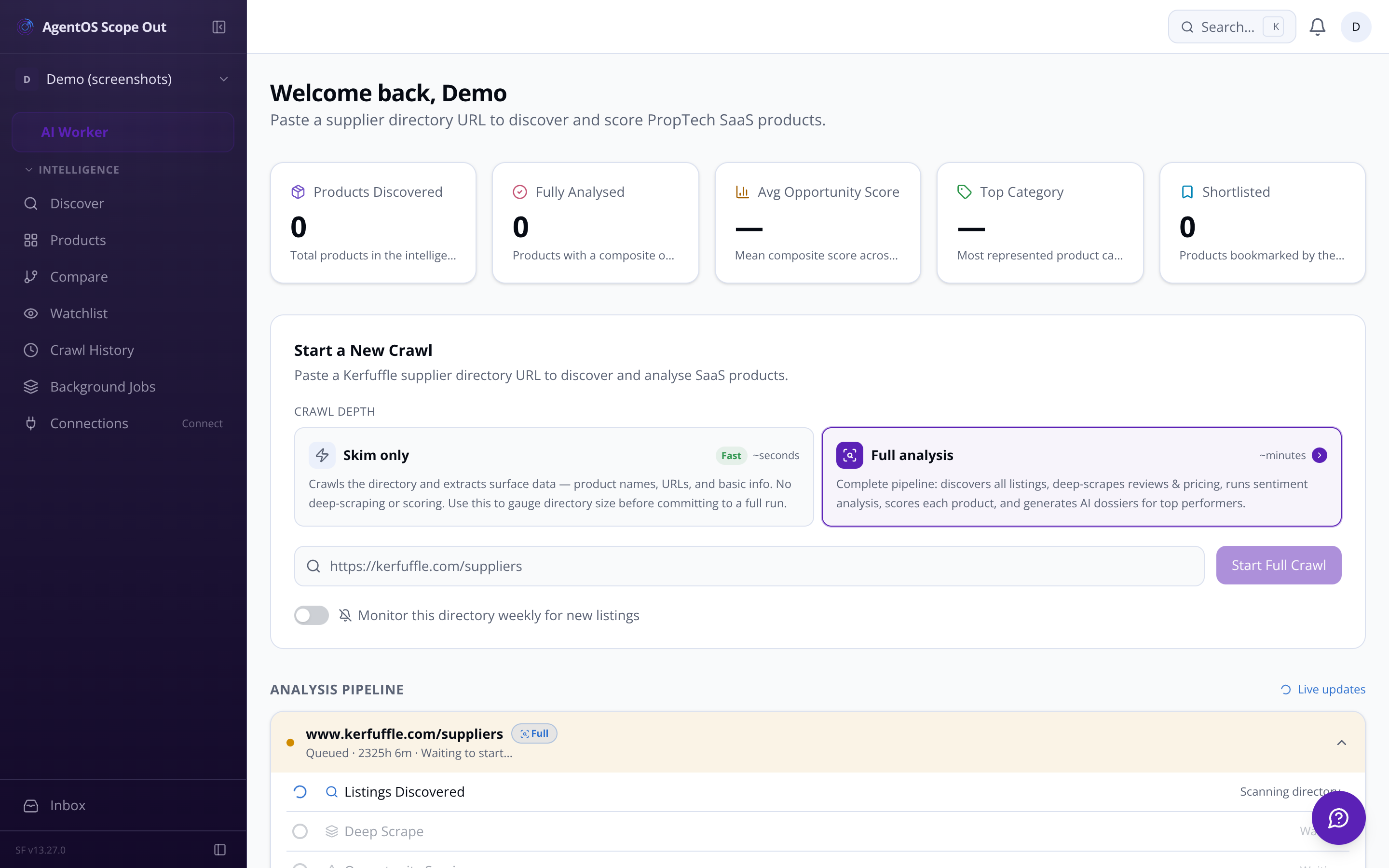
[ PIPELINE / OVERVIEW ]
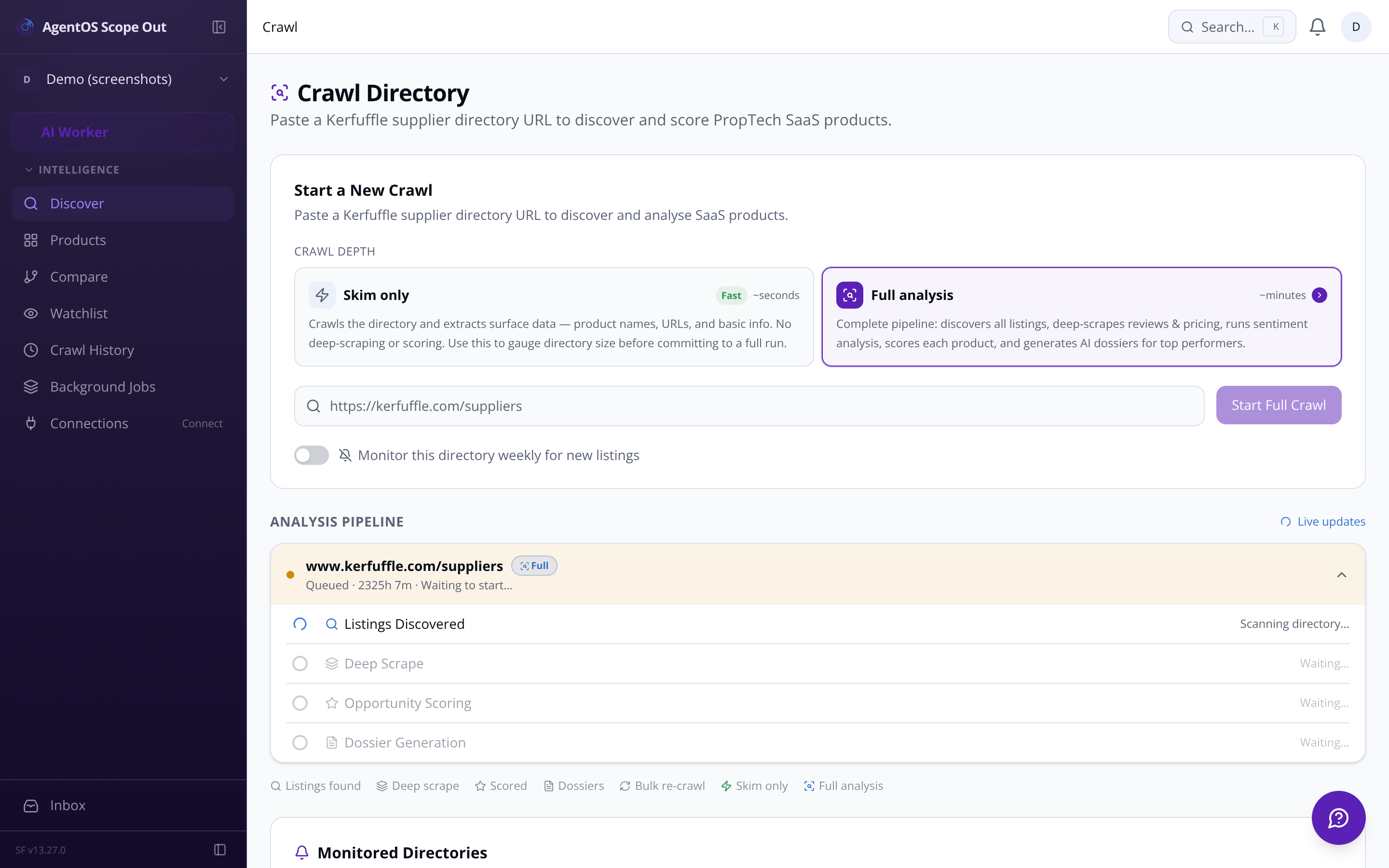
Choose Skim (seconds, surfaces all listings) or Full Analysis (minutes, scores and dossiers). The crawler handles rate limits, pagination, and deduplication automatically.
For each selected product, the pipeline visits the product's own pages and Kerfuffle listing: scraping star ratings, review text, pricing tier, and feature bullet points. Errors are flagged with retry controls.
The LLM evaluates each product on replicability, market demand, revenue potential, and competitive gap. Scores are stored with written rationales. Weights are configurable in Settings.
Each top product gets an auto-drafted mission statement, a 10-item feature list prioritised by market gaps, and a competitor weakness analysis — all copy-pasteable into your SaaS platform builder.
[ REQUEST / ACCESS ]
Scope Out is an internal tool. Access is restricted to the approved team. To discuss access or ask a question, email us at sf-core-org-support-agentos-scope-out@saas-factory.ai
[ CRAWL / DISCOVER ]
Point Scope Out at any PropTech directory — starting with Kerfuffle.com — and it crawls every listing, respects rate limits, handles pagination, and surfaces every vendor with category tags and descriptions. Skim runs finish in seconds. You decide which products warrant a full deep-analysis before committing compute.
Pagination-aware crawler with per-domain rate limits and robots.txt compliance
Skim-first vs full-analysis depth toggle — audit directory size before committing
Automatic deduplication across re-crawl runs
Expand to additional directories beyond Kerfuffle via Settings
[ SCORE / OPPORTUNITY ]
Every discovered product is scored by an AI pipeline across four independent dimensions, then ranked in a single sortable table. Adjust the weighting in Settings; the table re-ranks instantly.
Evaluates data model complexity, real-time requirements, third-party integration count, and AI needs against our stack (Next.js, Neon, Inngest, tRPC). Outputs a 1–10 score with written rationale.
[ COMPARE / DECIDE ]
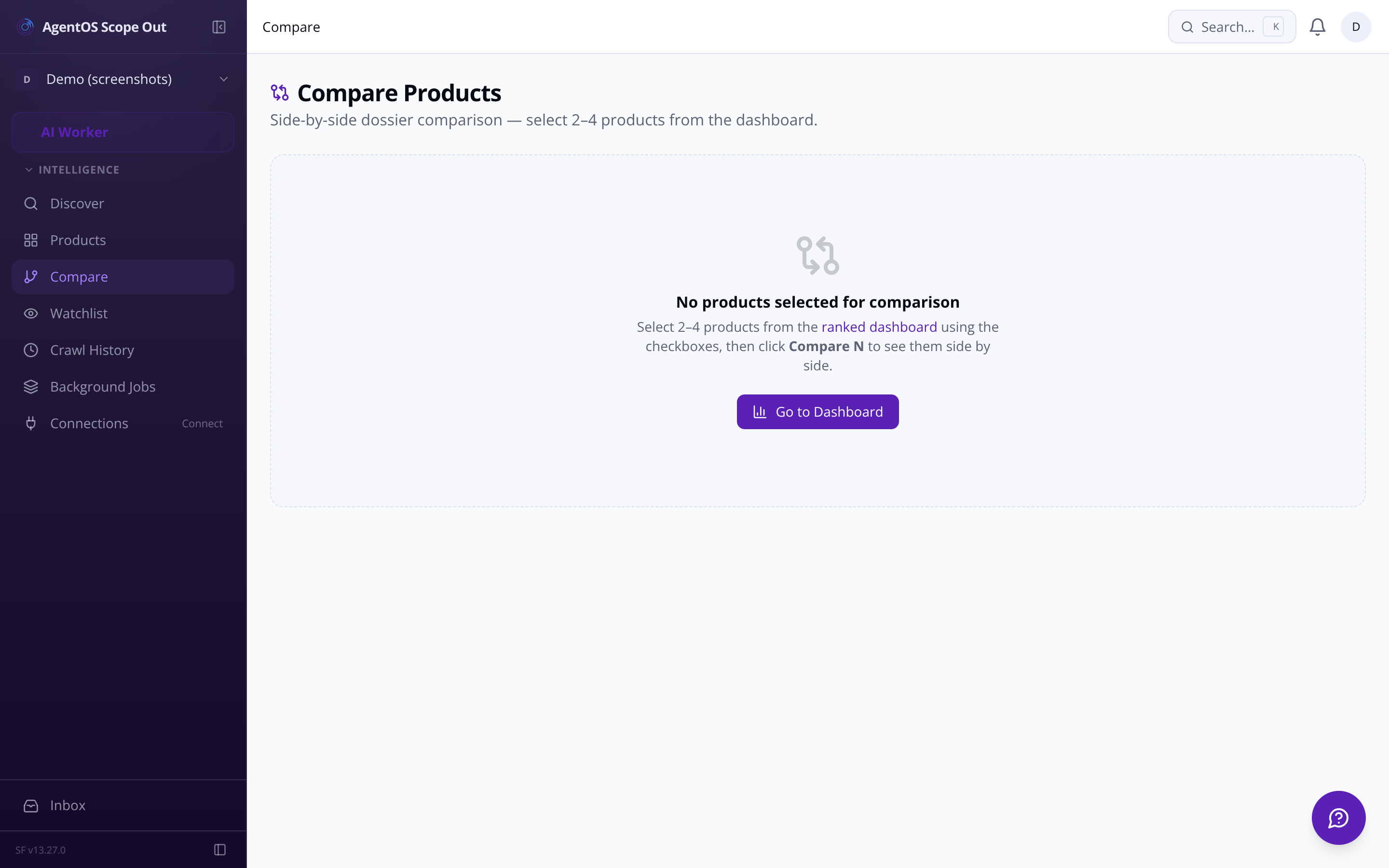
Select up to four products from the ranked table and open a side-by-side comparison — all four dimension scores, pricing tier, review count, and top weakness themes aligned in columns. Built for the exact moment when two opportunities are close and your team needs to commit to one.
[ DOSSIER / ARTEFACTS ]
Every analysed product gets three structured artefacts, copy-pasteable directly into the SaaS platform builder.
A concise positioning statement for a competing SaaS — grounded in the gap the incumbent leaves open, ready to paste into your product brief.
[ WORKFLOW / TEAM ]
Access is restricted to the allowlisted team. No public sign-up, no account management overhead. Team notes on dossiers are timestamped and attributed. Status tags track which opportunities have been reviewed, shortlisted, or are already in build.
Product status lifecycle: new → reviewed → shortlisted → building → archived
Threaded notes on every dossier, attributed and timestamped
Weekly email digest — top 5 new products and biggest score movements
Export dossier as Markdown or PDF; export full rankings as CSV
[ FAQ / DETAILS ]
Combines extracted pricing tier, category market size from the PropTech reference table, and review-implied adoption to estimate ARR range for a new entrant. Scored 1–10.
Review volume, recency, average star rating, and positive-to-negative sentiment ratio combine into a single demand score. Logarithmically scaled so thin-review products still register signal.
Mines negative reviews exclusively. Surfaces the top three recurring complaints, maps them to buildable opportunity themes, and scores gap severity by frequency. This is where the real edge lives.
Score dimension breakdown with visual bar/radar chart per dossier
Track score movement over time — ▲/▼ indicator since last analysis
Shortlist winners into the dedicated Watchlist view
Prioritised by gap severity — what to build first based on what existing customers most frequently complain is missing.
Derived entirely from negative reviews. Top three recurring complaint themes mapped to product opportunity types with frequency and severity scores.
[ MONITOR / AUTOMATE ]
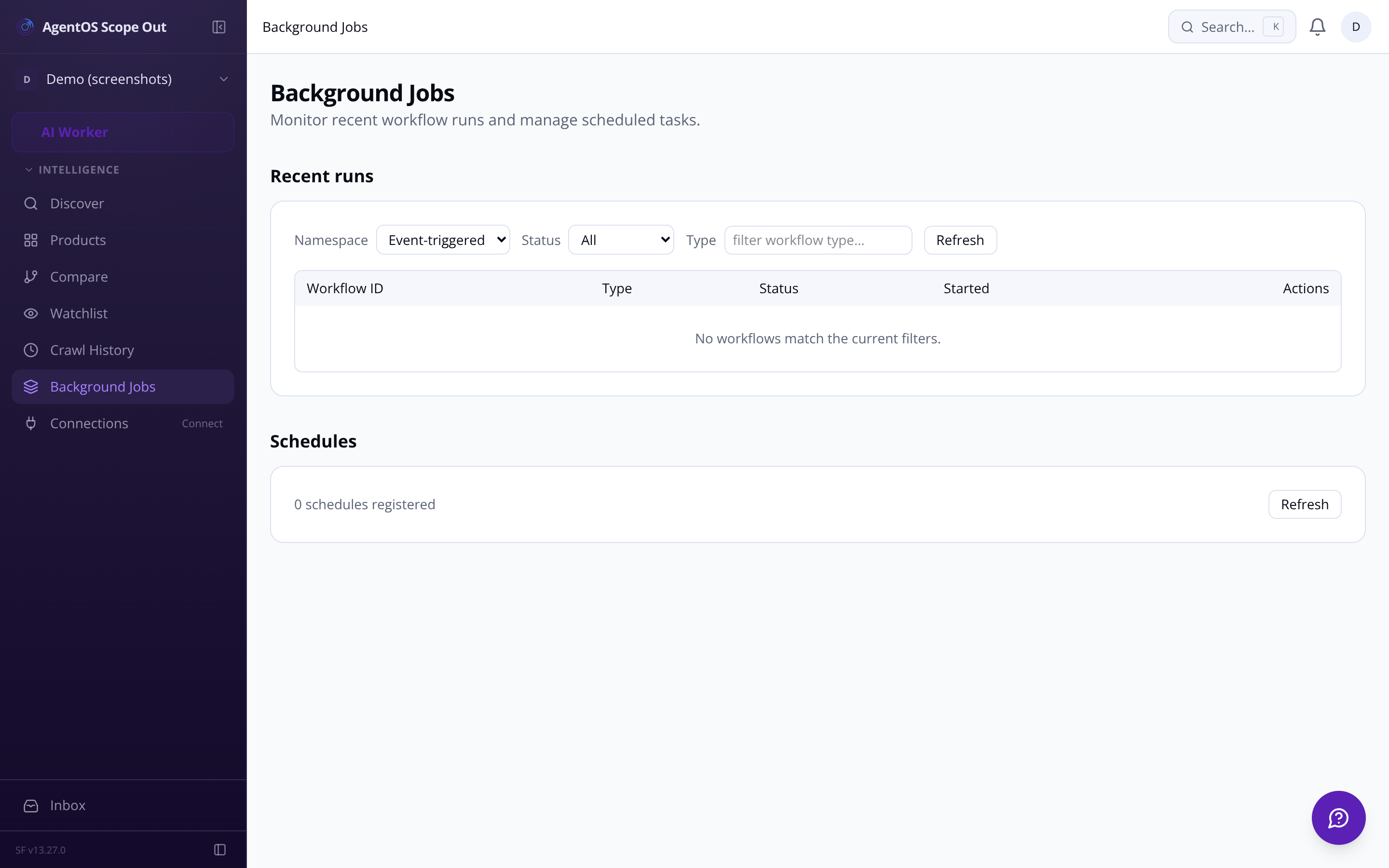
Weekly cron re-crawls monitored directories and flags newly discovered products with a 'new since last crawl' badge. In-app and email notifications fire when a shortlisted product's score shifts significantly — so you know when a market moves without checking manually.
Scheduled weekly re-crawl per monitored directory
Score movement alerts — ▲/▼ 1.5+ point threshold triggers notification
AI cost tracking per crawl run with configurable budget threshold
Crawl history with full audit log per run
